


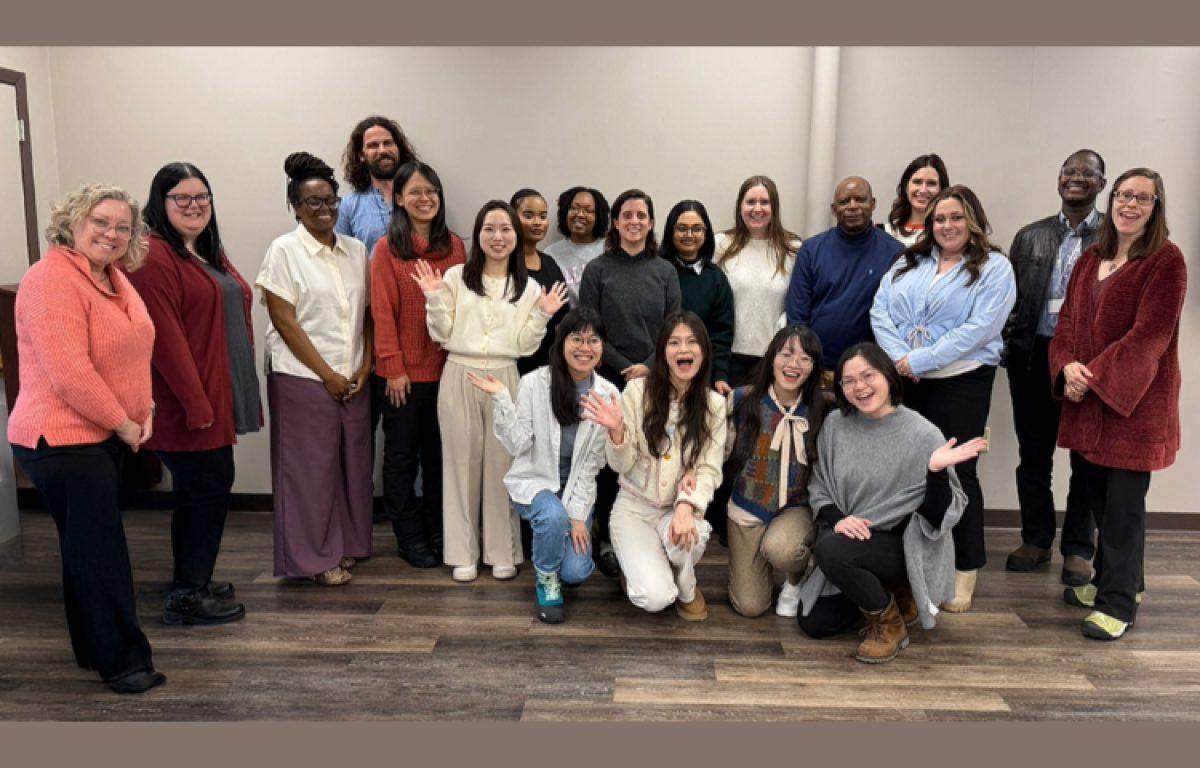

URBANA, Ill. (Chambana Today) — To better understand and address local health needs, the Champaign-Urbana Public Health District (CUPHD) is partnering with U of I graduate students to design a more inclusive community health survey.
Students in a graduate survey research methods course helped CUPHD update its community needs assessment to better reflect underrepresented populations, including unhoused individuals, people with disabilities and older adults. The revised survey will inform a future assessment planned for 2028 or 2029.
“The new model is shifting away from a top-down approach to focus on accessibility, inclusion and meaningful participation,” said Keyana Diaz, a doctoral student who worked on the project. “These under-sampled groups face different barriers to health and health care, and their perspectives are essential.”
The project was part of HDFS 580, taught by Jacinda Dariotis, professor of human development and family studies. Students collaborated with local organizations throughout the semester to create evidence-based surveys tailored to real-world needs.
In addition to CUPHD, student teams partnered with the Community Foundation of East Central Illinois, DREAAM, and Cunningham Children’s Home. The surveys will help organizations assess program impact, guide strategic decisions and improve training and services.
“Partnering with the course strengthened how we collect and interpret data,” said Allison Winter, president and CEO of CFECI. “The students’ emphasis on inclusive design will significantly enhance our ability to assess community needs.”
Students said the experience pushed them beyond the classroom.
“It wasn’t just about showing what we learned,” said graduate student Teri Lahmon. “It was about building a practical tool that real organizations can use to make decisions.”
While the semester has ended, CUPHD plans to continue refining the survey with university and community partners before deployment.
“This is the first phase of a future community health assessment,” said JR Lill, IPLAN specialist at CUPHD. “We’re optimistic about serving the community in new ways based on the information we gather.”