




CHAMPAIGN, IL (Chambana Today) — Champaign will need to add more than 7,000 housing units over the next decade to keep up with demand, according to the city’s ongoing housing study with consultant RDG Planning and Design. Early findings presented to the city council show that about 6,460 of those units should serve non‑student households, while roughly 548 student‑focused units will be needed by 2035.
The analysis centers on housing for residents and workers across income levels, though staff noted the student market remains part of the overall picture. Officials say the preliminary numbers point to a housing system under strain, with renters and homeowners facing rising costs and limited options.
Neighborhood Programs Manager Jennifer Carlson said the study’s mapping and data-collection tools — including resident and landlord surveys — are essential for understanding where pressure is building. “The more detailed our data is, the better we can understand where the pressure points are,” Carlson said. “That includes which neighborhoods are seeing the most stress and where conditions are starting to decline.”
She said community participation will directly shape the city’s housing strategy. “We really rely on stakeholder input to get the full picture,” she said. “The surveys allow residents and housing providers to tell us what they’re experiencing day to day, and that insight is just as important as the numbers.”
Lauren Weber, a Community Development Specialist with the city, said the findings highlight a clear need for expanded housing options. “We have to widen the path to more homes,” she said. “That means mixing approaches — everything from zoning and incentives to partnerships and preservation — so the next steps actually deliver places people can live.”


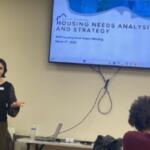
Recent trends help explain the urgency. Median gross rent has climbed 50 percent since 2010, and market‑rate rents have risen 57 percent since 2015, averaging $1,383. Home prices have grown 63 percent in a decade, and only 23 single‑family homes were permitted in 2024 — the lowest annual total in nearly 60 years.
Vacancy data reflects similar constraints: the citywide rate stands at 2 percent, with a landlord survey showing 1.4 percent. Officials say such limited availability makes it difficult for residents to find alternatives, even when current units fall short of their needs.
Additional indicators of strain include the 2025 Point-In-Time Count, which recorded 355 individuals experiencing homelessness, and the fact that 55 percent of renters are cost‑burdened.
Deputy City Manager Christopher Walton said the tight market is affecting households across the board. “Right now, the market is so tight that people are competing for the same handful of listings,” Walton said. “If we want rents to stabilize, we need more homes of every type — especially those affordable to working households.”
He said new construction must go hand‑in‑hand with preserving existing homes. “We can’t build our way out of this if people are being priced out or pushed out,” Walton said. “Production, preservation and protections have to move together.”
The study’s neighborhood focus areas include communities near downtown, the Garden Park and North Prospect corridors, and central Champaign neighborhoods such as Kenwood and Holiday Park. As part of the effort, the city is partnering with the Illinois Housing Development Authority on a Housing Stock Survey and is recruiting volunteers to help document property conditions using ArcGIS Field Maps.
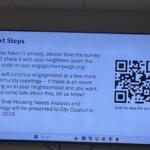
Two surveys — one for residents and one for landlords and housing providers — remain open through early spring. A final report is expected in May, after which staff will bring recommendations to the city council.
“Champaign is not alone — cities everywhere are feeling these pressures,” Weber said. “But with good data, strong public input and a clear plan, we can take meaningful steps toward building the homes our community needs.”
Contribute your opinion to the process through these surveys:
Champaign County Survey: Champaign Community Housing Survey
Landlord & Housing Provider Survey: Champaign Landlord Survey