



CHAMPAIGN, Ill. (Chambana Today) — This is my friend Kimi’s fault (and I mean that in a good way). I visited her earlier this year, and she had a season of Stranger Things playing in the background. I had heard about the series, but I hadn’t seen it before, so I went back home and binged the whole show. There’s a type of monster in the show called a Demogorgon, and as a plant nerd, I find them fascinating because their heads/faces are clearly inspired by a flower. Every time one comes on screen it’s kind of a ‘jumpscare,’ but it looks close enough to a flower that my crazy brain immediately goes into identification mode. I scoured the web for photos of flowers that remind me of the Demogorgon. Consider this just a creative excuse to talk about weird plants.
This article is silly because flowers don’t eat things.
I’ll be comparing the shape and overall vibe of Demogorgon heads to flowers but right off-the-bat this is a ridiculous comparison and is purely just for fun. The Demogorgon has a mouth, and its head is clearly shaped like a flower, but the flowers don’t eat and are not the heads or faces of plants. As far as I understand, there’s never been a plant found that produces truly carnivorous flowers. I know that sometimes people use the word flower to refer to a whole plant, so before you start yelling at me saying ‘what about Venus flytraps,’ when I say “flower” I mean the part of a plant that is the flower. The flytrap part of Venus flytraps are leaves; their flowers look like normal flowers. Leaves are usually the thing that carnivorous plants use to trap insects, but there aren’t any carnivorous leaves that have a star or flower shape like a Demogorgon head. Venus flytraps, all three kinds of pitcher plants, sundews, the fabulous pinguiculas (which I call pinguins) etc. — none of those look like demotion heads and all of those catch and digest prey with special modified leaves, not their flowers. I guess I should mention that there are a teeny-tiny number of species that have flowers which could possibly be considered quasi-carnivorous or at least deadly to some insects (like that one type of passionflower and all the ficuses). In general, though, the part of the plant that is the flower is not the part that it eats. I think Little Shop of Horrors and Nintendo games misled the culture. In fairness, a lot of flowers look like heads and some definitely look like they would eat something if given the chance. Some flowers even have common names like ‘carrion flower’ or ‘corpse flower’ but even those aren’t carnivorous. Plants use flowers for reproduction; and the carrion/corpse flowers create scent compounds that attract certain pollinator flies. Yes, flies are pollinators of some kinds of plants. Most species of flies mind their business, but there’s a handful of them that terrorize us humans and have given all of them a bad name. To be clear, the flowers are creating some of the scent compounds found in rotting meat, but there is nothing in them that is actually rotting (and they usually only smell badly if you’re in an enclosed space with them). Some flowers are mouth shaped, and some flowers even trap insects for a while (Bucket orchids, Giant water lilies, etc.). So, we need to set aside the fact that the Demogorgon eats with its flower face in order to move forward with this comparison. If anything, the mouth is kind of more… like an octopus or a squid or something.

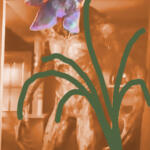

Second, this article is stupid because flowers are identified based on their sexual organs, not their vibe or shape.
Plants don’t know they are part of a species. We put them in boxes and label the boxes, but plants don’t care. To put it in mammal terms (and barring the weird exceptions), plants just need to make babies that are able to grow up and make their own babies (talking about spores or seeds). Plants can’t look for mates like animals and fungus can. Some plants have swimming sperm: (moss, lycopsids/clubmosses, bryophytes, ferns, cycad palms, and Ginko trees), but none of those produce flowers. The flowering plants don’t have swimming sperm; their ‘sperm’ equivalent is packed inside pollen grains. The pollen needs to land on a flower that has a compatible surface that the pollen grain can germinate and grow a tube down into the flower until it makes it to the ovaries, and then the DNA needs to be compatible enough for the egg to get fertilized and grow into a seed that is able to grow up and make its own seeds. Some plants (a number of trees, grasses, etc.) use the wind to move their pollen, but most flowers that we recognize have a shape/smell/color that attracts pollinators (mostly insects). People figured out a long time ago that flower shape, size, and color can sometimes vary a lot between closely-related-species, but flower size/color/smell are kind of like makeup or lipstick for pollinators. What works is what reproduces. The plants with flowers which have colors/shapes/smells that didn’t work or don’t make as many seeds will just fizzle out. The shape, size, and color of flowers for individual plants that are a part of the same species can also shift across its native range and those features can also shift across a surprisingly small number of generations. But again, flower shape/size/color/smell is just lipstick. As generations pass, one part of plants that changes the slowest is how the sexual parts of each flower fit/stack together. The most scientific/accurate method to identify a plant from scratch is not by looking at the leaves, petal shape, feeling, or vibe; you have to locate the sexual parts of a flower and reference an identification ‘key’ to figure out what species it is. But AS FAR AS I KNOW the Demogorgon’s face doesn’t have sexual parts, so the connections that I am making in this column are ‘off-key’ comparisons.
With that out of the way, what follows is an eclectic assortment of plants across the world. Some I myself just learned about. Each one has a story, most of them are very rare, and some are even critically imperiled. Unfortunately, due to copyright restrictions I am not able to embed most of the photos here, but I have links in every paragraph to galleries of high-quality photos of each plant on iNaturalist. There are a lot of plant names in this article, and a lot of them are hard to pronounce. Don’t blame the plants; they are sweet, beautiful angels and their names aren’t their fault. Although… here’s a little secret between you and me: botanical Latin is not a spoken language. Sure, there are common pronunciations, but officially, it’s not a spoken language and there are no set or proper ways to pronounce things. Iff you’re reading this and don’t know how to pronounce something: make it up. You have my permission. And if anyone ever corrects you, there’s nothing stopping you from doubling down on your way of saying it. And if someone says that’s a crazy way to pronounce it just shrug your shoulders and tell them ‘I’ve heard it both ways.’ You’re welcome.
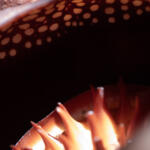
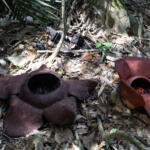
It kind of reminds me of Chambana’s native Wild Ginger…
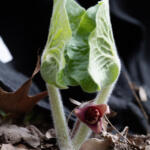
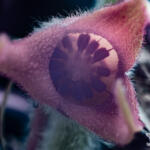
The native plant that I think is most Demogorgon-esque is Wild Ginger (Asarum canadense). I know it sounds delicious, and allegedly it does taste a bit gingery, but it’s also toxic so don’t. Central Illinois is famous for being a former prairie. The fires that created the prairie and blew from west to east would frequently stop on the west bank of streams and rivers, so small forest groves would flourish on the other side where the fires were less frequent. In Champaign County, these groves are where Wild Ginger is found. It carpeted a bit of forest understory in small forests like the Big Grove, which was the forest that used to cover what is present day northeast Urbana (Brownfield and Trelease woods are remnants of the Big Grove). These days, my favorite time and place to see Wild Ginger in Champaign County is in late spring along the short trail at Collins Pond (a secluded enclave of Homer Lake Forest Preserve). It’s also a great ground cover for shaded gardens, and it has these really handsome and suave heart-shaped leaves. It’s not really known for its flowers because their blooms are hidden below the leaves, but as you can see the flared petals and overall flower shape do have a touch of the Demogorgon in them.
…but it also has the essence of an Aristolochea..
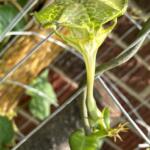
Wild ginger isn’t actually a ginger at all, it’s a relative of the a-wrist-o-lo-chias (Aristolocheas), which are a group of plants that have even weirder flowers than Wild Ginger. They’re often called Dutchman’s pipevine, and the flowers in this group of plants have jug-like features (or I guess tobacco pipe-like features for some species) that look like carnivorous leaves of pitcher plants. Pipevine flowers aren’t carnivorous like the pitcher plant leaves, but they look just as crazy so it’s still a win for us. There’s one in particular from Central America called Aristolochea grandiflora and it doesn’t have the full Demogorgon look because it’s missing the pointy petals, but it does capture some of the Demogorgon spirit with the spookiness and the splotchy coloration.
…and it’s not an Ayenia unless season 5 takes a weird turn…
As I continued my search, it crossed my mind that maybe I should check in with the hibiscus family, and I know what you’re thinking, doesn’t the staminate column of most hibiscus relatives ruin the Demogorgoncity? And yes, it does, but I looked anyway. I ended up finding some relatives of Cacao (yes, chocolate is in the hibiscus family) called Ayenias and they look like – this is hard to explain — theoretically if a full-grown Demogorgon’s face ever needed to molt… that’s what these flowers look like. I think immature Demogorgons molt because that was shown/implied in Season 2, but Ayenia cordobensis looks like a mature Demogorgon face halfway through the process of molting. Just look at these pictures you’ll see what I mean.
…emotionally, it’s a Hydnoroiea (and an introduction into plant parasitism)
Plant parasitism is the dark arts of the plant world, but it is actually not as uncommon as you would think. Most plant parasites need their hosts to be reasonably healthy so they wield their powers with care and have minimal effects on their hosts. There are a pesky few that can become a problem (like some of the dodders and some of the nearly identical yet completely unrelated dodder laurels). There are varying degrees of parasitism too, with some species being able to survive and reproduce without ever finding a host, but they’ll grow more vigorously when they find the roots of a host plant to tap into [FACULTATIVE] (like the local Aureolarias). Other species are fully dependent on their host, but have green leaves and can still make their own energy from the sun [OBLIGAGTE HEMIPARASITIC] (like some mistletoes), and still others are completely dependent on their hosts and don’t make their own energy at all [OBLIGATE HOLOPARASITIV] (like this Thismia, an extremely rare or extinct tiny plant only native to the Chicago area that hasn’t been seen since 1916). For whatever reason, it kind of feels like the more a plant parasite species is reliant on a host, the stranger they get. Hydroroiea is a branch of the plant family close to the Aristolocheas that took a weird turn into parasitism. Really the Demogorguance is anywhere you turn in Hydnorioeae. They all grow on the ground and are parasites to the roots of various plants in tropical regions. First you have the Jakcalskos, which are some of the strangest flowers I have ever seen. They look like mammal or alien body parts, and they’re slightly unnerving. Then there’s a sister genus called Prosopanche which are a bit less intense but also has a Demogorgon vibe. In preparation for this article I was browsing this genus on iNaturalist and noticed one of the species was called Prosopanche demogorgoni. “Wait what.. Is that a reference?” I thought to myself. So I looked it up and turns out it’s a new species discovered in Brazil in 2019 and the given reason for naming it Demogorgon is: “Demogorgon is a fictional monster whose mouth resembles the P. demogorgoni flower.” How cool is that? But somehow, this is not the most Demogorgon-like flower I found. I kept going.
…perhaps it’s a milkweed relative?
There is a family of plants called Ah-po-sin-ay-see-ay (Apocynaceae). This family is also known as the milkweed family, yes that kind of milkweed. It’s my favorite plant family at the moment (I go through phases). As with many plant families, they are a united group based on their DNA and/or flower structure. The species in this family range from tiny crawling plants to huge trees, but many do have a handful of similar traits: their lucky number is 5, they are skilled chemists and specialize in poisons and weird scents. A lot of them prefer to only have a few pollinator friends, as many are only able to be pollinated by a very small number of insect species. This relationship with insects has led to the flower shapes and smells getting teased and pulled and pushed in all directions. There are a lot of other branches of the Apocynaceae family tree around the world that don’t look anything like milkweed, but if you look closely at the flowers, you can kind of tell they are in the same family. There’s one lineage in the family that I’m steering our ship towards, but first let’s make a few pitstops before we get to the main event. There are many in this broad family that have a Demogorgonish look, but here are a few random ones that stood out to me. Pachycarpus natalensis has a certain illustrated appearance of a Demogorgon, kind of looks like a Demogorgon’s face when its open (blooming?), with a closed Demogorgon’s face in front of it. Gonolobus incerianus is green but if there was a Heinz green ketchup version of a Demogorgon, it would look like this one.
…specifically a Ceropegiae (or at least it probably smells like one).
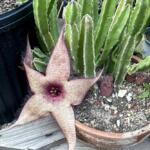
The best branch of the milkweed family would be a collection of genuses I call Sarah-pedge-ee-ay (Ceropegiae). They live mostly in Africa/Eurasia, they conveniently pack up all their little pollen grains into 5 little saddlebags, and they’re weird-weird. Most of them are succulents, and some even look like cactuses (Cactuses are a family of plants that are native to the Americas; Ceropegieae are not related to them). All of their flowers are weird. A lot of them smell like something rotting to attract pollinator flies (remember: they’re not rotting. It’s just a scent). They’re kind of like scam artists or phishing emails in that the flies are tricked into landing on a thing that they thought was something else. Some of them put out regular scents that attract more familiar pollinators. But some of them are next level scammers. There’s one I’m growing at home called Ceropegia sandersonii and its flowers put out a scent that mimics the smell of an injured bee. This attracts a certain group of flies that feed on injured bees. Also, does it looks like a parachute? The flower traps the flies for a little bit, the pollen gets stuck on their body, and then they fly to another flower and fertilize that flower. This group is endlessly fascinating, but the goal here is to highlight the Demogorgulent plants. Of the Ceropegiaes The genus Stapelia looks most like the monsters. It’s hard to award a specific Stapelia the title of “Demogorgoniest,” but if I had to pick, maybe Stapelia gigantea? I’m not sure though, you tell me which one you think. My grandma used to grow one of these, I remember them blooming on her back patio (outside, of course, cause of the smell). I had a small plant a while back until I killed it RIP (it started rotting from the roots because of cold temperatures). There are some sister genuses to Stapelias (the Stapeliads) that are almost as Demogorgeous. Most notably for me are Brachystelma minor for its weird star shape and spikiness, Brachystelma gerrardii for the narrower petals and the dark coloration, Tromotriche herrei for looking like a cereal box version of a Demogorgon, Ms Edithcolea for just being herself, and the lastly the entire Tridentea genus. If the Demogorgons had sister species, they would look like various Tridenteas.
Wait, nevermind, it’s definitely an orchid…
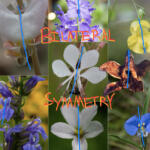
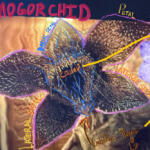
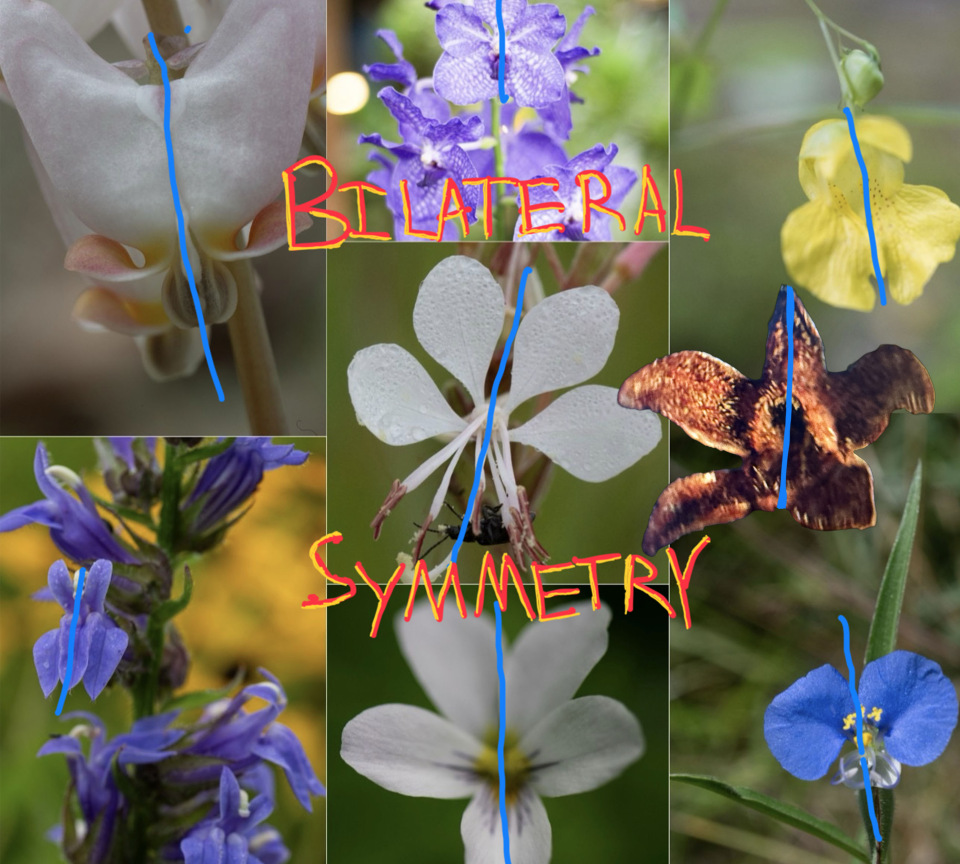
After an extensive minutes-long pseudoscientific investigation comprised of scrolling through screenshots and YouTube binges of behind-the-scenes interviews; I can conclude that the Demogorgon face is technically most similar to an orchid. But again, I have to stress how absolutely stupid this article is because orchid flowers are flowers, which means that each orchid flower is comprised of various parts, many of those parts are sexual in nature. The parts of the Demogorgon’s face that correspond to orchid parts are probably not sexual organs?? The reason the Demogorgon is most like an orchid starts with the petal arrangement and the type of symmetry. Even though the Stapelias I just talked about look very close to the Demogorgon, and capture some of the vibe of a Demogorgon, they don’t share the same type of symmetry. Stapelias are radially symmetrical, meaning you can cut them in half any which way, and one half will match the shape of the other half. A sunflower is radially symmetrical because if you look at it straight on you can divide the flower in half any which way and the halves are going to look the same. Demogorgon faces, orchid flowers, human faces, butterflies, and almost all other animals have bilateral symmetry and are not radially symmetrical. Our left side looks like our right side, but our tops don’t look like our bottoms (usually). With the Demogorgons it’s a bit odd because some cartoon versions in advertisements and licensed products usually show a simplified star face that appears at a glance to be radially symmetrical, but the actual Demogorgons in the show are not. They have a little lip thing at the bottom of their face and have some sort of horizontal jaw with a top and a bottom that opens and closes. Also, the top 3 petals and lower 2 seem to be grouped together. These features make their faces bilaterally symmetrical. That little lip at the bottom corresponds to a part of orchids called the labellum. The upper part of the jaw thing (barely visible on a Demogorgon but definitely there) corresponds to the ‘column’ of an orchid. Columns and labellums are unique to orchids, so since both are present, it means the Demogorgon is technically most similar to an orchid. However, I scrolled and scrolled through photos and couldn’t find any that exactly matched the shape or vibe. There are over 28,000+ species of orchids, and many don’t have photos online, so maybe I just missed it. The most Demogorgon-like ones I found don’t look ooky-spooky like the other flowers in this list; they kind of look like Muppet-baby Demogorgons if those were a thing (side note: ‘Muppet Baby Demogorgons’ – I would watch that show). This tiger orchid’s flowers have a mottled appearance that brings to mind an illustrated version of a Demogorgon. Bulbophyllum obrienianum has textured petals sort of like the mouth tissue of a Demogorgon. The Ravine Orchid Sarcochilus fitzgeraldii has petals that have the proportions of the Demogorgon petals. I also learned about the western underground orchid, which is an extremely rare Australian orchid and is a parasite of a fungus. Parasites seem to be the theme today. Well, technically pretty much all orchids are parasites of fungus at some point in their life cycle, but that’s a tale for another time. I think the flowers of said western underground orchid look a lot like the inner mouthy section of the Demogorgon’s face don’t you think? Moving right along, pretty much all of the species in the Telipogon and Dracula orchid genuses have some level of Demogorgon quality but Telipogon collantesii has the strongest similarity in that genus. The Dracula genus as a whole is a little bit harder to parse for Demogorgonocity, as they each give off a slight ooky-spooky vibe, but their flowers also look like monkey faces. I’m having a hard time not seeing the monkeys so you’re just going to have to decide for yourself.
But honestly it has a Rafflesia essence, so that’s what I’m picking as the winner.
I saved the weirdest for last. The group of flowers that I think has the most Deomogorgouance are sometimes referenced in world-record books and school curriculum as the world’s ‘largest flower’ but there are many plants that also hold largest flower records so let me tease this apart before I go into the details. If I said, ‘what’s the biggest tree?’ most people would say ‘oh that’s easy, the redwood. ‘ And yes, there is a redwood tree in California named Hyperion that is measured to be 380ft tall, and that is the tallest known tree in the world. But ‘biggest’ is such a loose term that there are a lot of other ways you can define it. There’s a male quaking aspen grove in Utah named Pando with 47,000 trunks and are technically all part of the same tree/organism. Is that the biggest tree in the world? You decide. In a similar way there are many different plants that hold the title for biggest flower because like the word ‘tree’ the word ‘flower’ is kind of ambiguous. Some plants like sunflower or broccoli will bunch their flowers together. In the case of sunflowers and its relatives (the asters) each of what we would call their ‘flowers’ is actually a group of sometimes hundreds or thousands of smaller flowers surrounded by a circle of petals. A single sunflower flower is actually a teeny-tiny spiky thing in the center of a sunflower. What we know as a sunflower flower is actually called an inflorescence (also a capitulum) because it’s made up of many flowers. There’s a slightly different kind of inflorescence called a branched inflorescence, and the easiest example of that is broccoli. A broccoli head is a giant cluster of thousands of small immature flower buds. That whole cluster of broccoli flowers is called a branched inflorescence because the flowers are on little branches but are still all part of one big flower cluster. The plant that makes the largest inflorescence is a palm tree from south and native to southeast Asia called the talipot palm. It only blooms once in its life and it puts out a branched inflorescence with millions of flowers which can be up to 26 feet long. As a current events note, an architect planted some in a park in Brazil in the 60’s and some of those started their first and only bloom this month (December 2025), here’s a link to the AP article. There’s another huge flower that makes the news from time to time that people like to call the largest flower in the world called a-more-foh-fal-us titanum Aka the Titan Arum (Amorphophallus titanum, yes, it’s named that for the reasons you’re thinking). Those flowers can be up to 10 feet tall but technically speaking this flower is like the sunflower. It’s an unbranched inflorescence, and it’s the largest one in the world. Inside the tall, pointy flower petal (called the spathe, which is a fun word) there is a smaller column (the spadix, not as fun of a word imo) of hundreds of individual, small flowers waiting to be pollinated. This flower is also one of the ones called a corpse flower because of its smell. As you can see there are tons of other ways to categorize the biggest flower, and really at the end of the day each plant is magical so who cares which is the biggest or whatever, they’re all winners in my book.
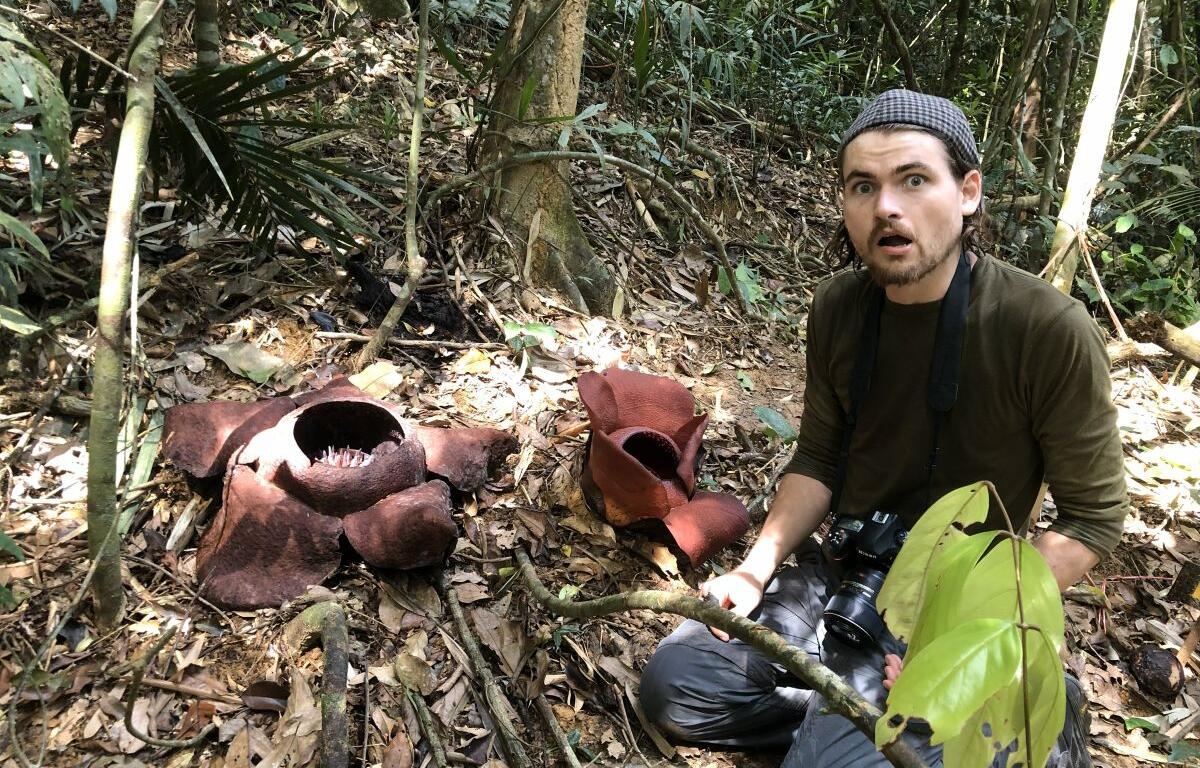
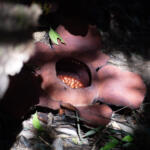
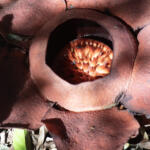
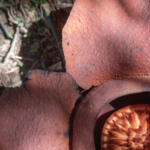
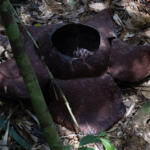
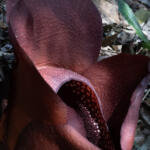
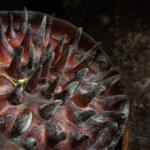
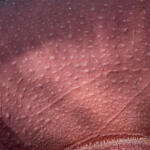
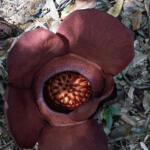
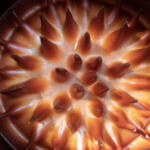
You thought I forgot this was about Demogorgon’s right? No, this was all a setup to say that there is another group of flowers ALSO called corpse flowers (or corpse lilies). The Raff-lee-shas (Rafflesia) are also from southeast Asia, and there are about 41 different species with flowers of various sizes. Two species, arnoldii and kerrii, have flowers that can get over 40 inches wide, and are regarded as the largest individual flowers in the world. All the rafflesias, even the smaller ones, have 5 petals like a Demogorgon’s head, but they are radially symmetrical, so they aren’t exactly the same as a Demogorgon. Despite that difference, their petals have a texture and vibe strongly similar to Demogorgon’s and the center of the flower in particular is very Demogorgon-esque, with many of the species even having spikes in the center (I don’t know what the spikes are for, but they’re called proboscis). Also not to brag, but having seen some in person I can tell you the flowers have an animalistic muscley leathery feed-me-Seymour quality (they are not carnivorous at all they just give off that vibe). The petals are not pointed, which is also unlike the Demogorgon, but Rafflesias have some relatives called the Saprias and Sapria himalayana does have pointier Demogorgon shaped petals. Those have too many of petals for them to resemble a Demogorgon, but they are definitely worth looking at. So officially, despite the morphological differences, the 41 species in the 5 petaled Rafflesia genus are my submission for most Demogorgon-like. Most people have only heard of the largest 2 types of rafflesia I mentioned earlier, but the 39 other species are equally fascinating. One of the other species is Rafflesia lagascae which for me seems to be the most Demogorgon-like of the bunch. Also some of the species have dead flowers turn dark and look unnervingly close to the actual CGI head. Rafflesias are such a strange group of plants and if you ask me the size of their flowers is one of the least interesting things about them. They are also known as corpse flowers because they, like numerous other flowers mentioned here, put out a smell to attract certain types of flies that are drawn to rotting meat. The listicles and silly regurgitated click articles I’ve seen over and over gave me the impression that the smell would be unbearable, but the ones I smelled didn’t smell that bad? It doesn’t smell ‘good’ but it didn’t smell ‘rotting meat’, just smelled like a funky flower to me. The flies think it’s close enough to a rotting smell that it lures some species of blowflies and others in thinking they’re about to get a meal, but it’s a trick. There’s no food in the flower, but they get sticky pollen on them and then fly off to another rafflesia nearby, and that’s how they get pollinated. It’s more complicated than that but for the purposes of this article, that’s the explanation I’m going with. Rafflesias and their sisters the Saprias and the Rhizanthes do not have roots, or stems, or leaves; they’re parasites, just like the Hydnoras at the beginning of this article. Like I said, parasitic plants get weird. Rafflesias are parasitic to a tropical genus of vines related to grapes, and they exist only as a group of cells (called the haustorium) inside the vine until they push out a flower bud. This brings up some questions such as, do the flowers make seeds and how do the seeds grow and get inside another vine in the first place? We know they make seeds, but as far as I can tell, nobody has ever seen a seed grow and slip inside another vine. It’s not a complete mystery; the plants’ genome has yielded clues and there are solid hypotheses for how they germinate and get into the vine, but to my knowledge the process has never been observed (timestamp 2025.12.23). Pretty much everything else about them is weird and confusing too. I didn’t even get into the male/female flowers or the horizontal gene transfer.
So there you have it. I hope you have enjoyed this strange article.