



CHAMPAIGN, Ill. (Chambana Today) — For Sarah Sandquist, leading the Champaign Park District means thinking far beyond the next season. It requires balancing immediate community needs with long-term planning for a district that spans 60 parks, dozens of facilities, and a wide range of programs.
Sandquist said Champaign’s appeal lies in its combination of accessibility, arts, and community connection — qualities that influence how she approaches her role as executive director. “It really is the mix of the best of both worlds,” she said.
That mix also presents challenges. The Champaign Park District is a full-service district, offering everything from aquatics and athletics to arts, theater, and nature-based programming. Many of its facilities, however, are aging. With the exception of the newer Martens Center, all district buildings are at least a decade old, with some far older.
“We do all the things, and we want to do them well,” Sandquist said. “But that means constantly balancing priorities when everything feels like a priority.”
Over the past year, the district has focused heavily on planning. Consultants have been brought in to assess facilities, evaluate mechanical systems, estimate renovation or replacement costs, and help reimagine how spaces could be adapted to meet future community needs. Staff interviews were also part of that process, identifying where space limits programming growth or creates operational challenges.
One pressing example is playground replacement. The district maintains 35 playgrounds, each with an average lifespan of about 22 to 23 years. Currently, the park district replaces roughly one playground per year — a pace that does not keep up with long-term needs.
“That math doesn’t work,” Sandquist said.
Recent and upcoming playground projects include Clark Park, Millage Park this spring, and Garden Hills and Wesley Park in the next fiscal year. Sandquist said distributing improvements across the district is essential, particularly in areas that have historically seen fewer investments.
“Everyone deserves access to quality parks, facilities, and programs,” she said.
Arts programming has emerged as one of the district’s strongest areas of growth. Youth theater and pottery classes routinely fill within hours of registration opening, often with significant waitlists. In response, the district has added additional theater productions, expanded class offerings, and invested in equipment, including additional pottery wheels and kilns.
“Our kilns are running 24/7,” Sandquist said.
Even with those expansions, space remains a limiting factor. The district continues to explore ways to expand arts programming at facilities such as the Springer Cultural Center while preserving historic assets like the Virginia Theatre, which Sandquist described as “such a beautiful space.”
Safety across parks and facilities is addressed through multiple partnerships, including coordination with Champaign police, local school districts, and the park district’s own “park ambassador” program. The ambassadors are unarmed, contracted staff trained in visibility and de-escalation and are frequently present at Centennial Park and Sholem Aquatic Center during busy seasons.
Staffing has been another major focus. Like many park districts, Champaign struggled to hire seasonal employees in the years following the pandemic. Sandquist said that has improved significantly due to changes in how the district approaches hiring.
“Staffing is always an issue,” she said, but added that flexibility has helped. “We don’t expect people to work 40 hours a week with no vacation anymore.”
The district now accommodates employees who want to work fewer hours, balance multiple jobs, or take summer classes — an approach Sandquist said has led to better retention and higher-quality staff. Last year marked the first time all aquatic staff positions were filled by May 1, covering more than 100 employees.
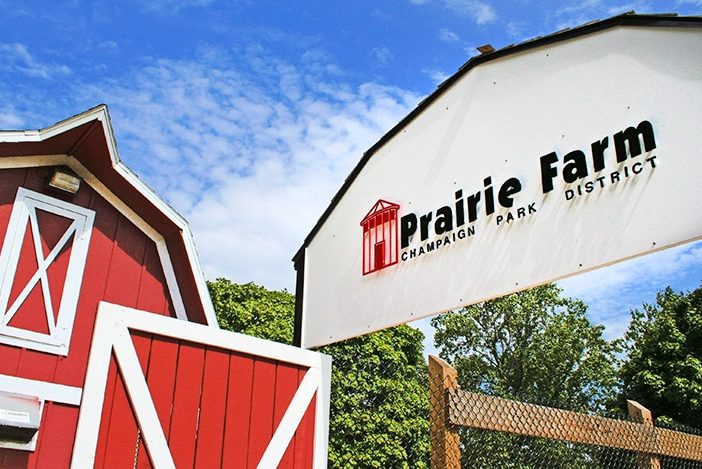
Looking ahead, Sandquist said long-term goals include facility renewal, expanded arts capacity, and a reimagining of Prairie Farm, a long-standing community asset with deep historical roots. The district recently acquired additional land near the site and is working with consultants to envision how Prairie Farm could be enhanced while honoring its legacy.
In the shorter term, Sandquist said summer programming remains her favorite season, when the district’s work is most visible. “Summer is when we really get to show off our best selves,” she said.
New offerings this year include half-day camps that rotate through neighborhood parks, bringing programming directly into different parts of the community rather than concentrating it at a few sites. The district will also continue popular seasonal events and expanded camp options.
Spring 2026 registration: Residents can sign up for summer programs starting February 4. Online registration is available at Champaign Park District Programs. Families who need scholarships must complete the scholarship application before registering for spring or summer programs.
Employment opportunities: Those interested in working for the park district can apply for jobs online at Champaign Park District Careers
Public input remains central to decision-making. Residents can attend twice-monthly board meetings, submit comments through the park district website, or contact staff directly.