


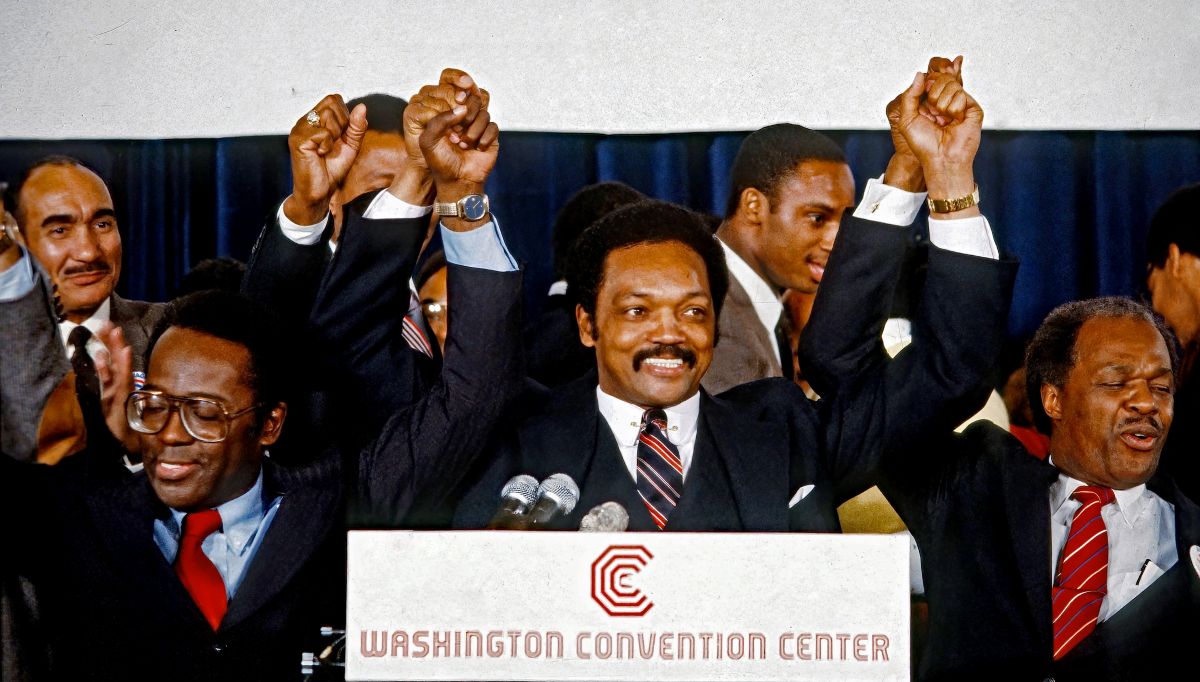

CHICAGO, IL (Chambana Today) — The Rev. Jesse Jackson, a protégé of Martin Luther King Jr. who became one of the most prominent civil rights leaders in the United States and a two-time presidential candidate, has died at 84.
Jackson died Tuesday at his home in Chicago, surrounded by family, according to a statement from his daughter, Santita Jackson.
For more than five decades, Jackson stood at the forefront of the modern Civil Rights Movement, advocating for voting rights, economic opportunity, education access and health care. After King’s assassination in 1968, Jackson emerged as a national figure, positioning himself as a standard-bearer for the movement’s next chapter.
Through his Rainbow/PUSH Coalition, Jackson pushed corporations to diversify their workforces and invest in minority communities, often using boycotts and public pressure campaigns to secure commitments from major companies. His message of empowerment echoed in his oft-repeated declaration, “I am Somebody,” a refrain meant to affirm dignity across race and class lines.
Ordained as a Baptist minister, Jackson combined the cadence of the Black church with sharp political instincts. His speeches frequently blended rhyme and moral urgency, popularizing slogans such as “Keep Hope Alive,” which became a rallying cry during his 1984 and 1988 campaigns for the Democratic presidential nomination.
Though he never secured the nomination, Jackson won 13 primaries and caucuses in 1988, expanding the political possibilities for Black candidates and helping lay groundwork for future leaders, including Barack Obama.
Beyond U.S. politics, Jackson engaged in high-profile diplomatic efforts. He helped negotiate the release of American prisoners abroad and met with foreign leaders in unofficial missions aimed at easing international tensions.
In later years, Jackson continued to advocate for racial justice, appearing at protests and public events despite significant health challenges. In 2017, he disclosed a Parkinson’s diagnosis and more recently faced a rare neurological disorder that limited his mobility and speech.
Throughout his life, Jackson drew both admiration and criticism, praised for his relentless activism and at times faulted for courting the spotlight. Reflecting on his legacy in a 2011 interview, he described his work as tearing down walls so others could pass through.
“It’s America’s unfinished business,” Jackson said in one of his later public reflections. “We’re free, but not equal.”
He is survived by his wife, Jacqueline, and his children.