


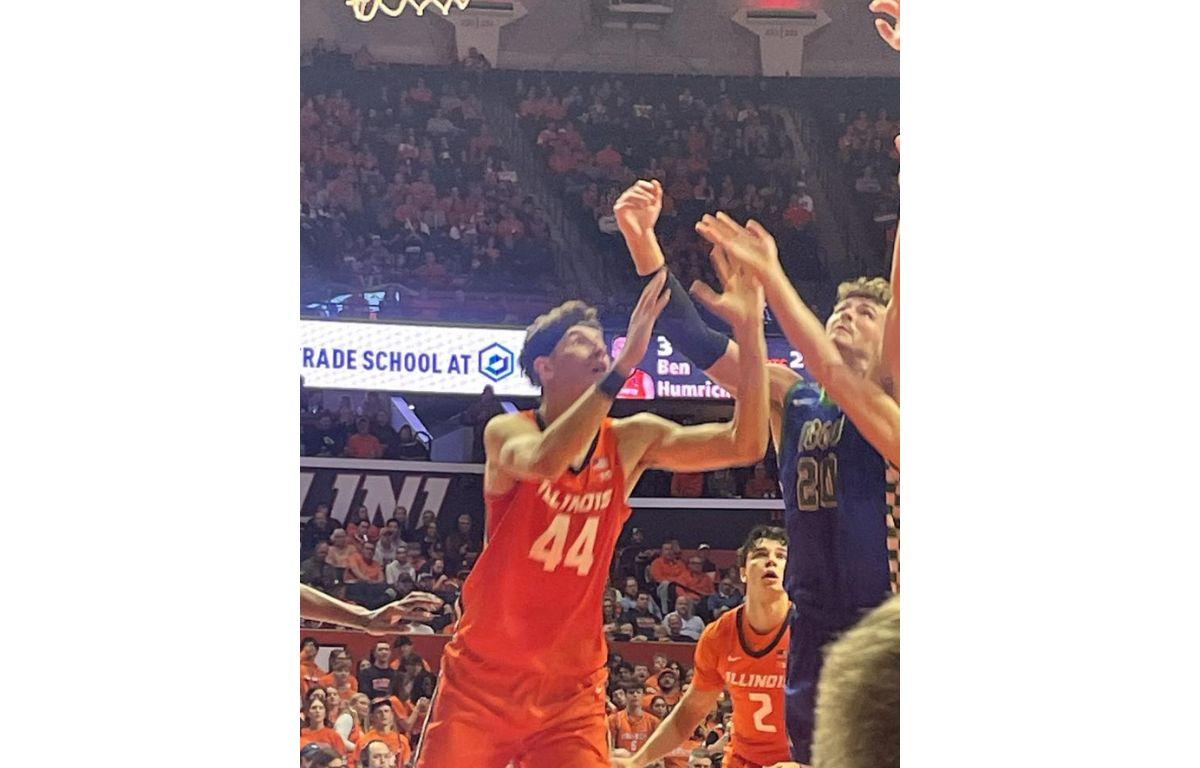

INDIANAPOLIS, IN (Chambana Today) — The run came, the pressure mounted and the shots stopped falling. None of it mattered in the end for UConn Huskies.
Despite a frigid second half and a determined rally from Illinois Fighting Illini, UConn leaned on its championship experience to secure a 71-62 victory Saturday night at Lucas Oil Stadium, advancing to yet another national title game.
The Huskies, a No. 2 seed, are now headed to the championship for the third time in the last four seasons under head coach Dan Hurley, continuing one of the sport’s most dominant recent runs.
UConn appeared in control for much of the night, building a double-digit second-half lead behind timely 3-point shooting and strong first-half performances from Braylon Mullins and Tarris Reed Jr. But the offense went cold late, as the Huskies shot just 28.6% after halftime and failed to make a field goal over the final minutes.
That opened the door for Illinois.
The Illini chipped away at the deficit with a late surge, fueled by aggressive drives and consistent free-throw shooting. Illinois finished 18-of-23 from the line and used a 10-0 run to cut the lead to four in the closing minutes.
Freshman guard Keaton Wagler and forward Andrej Stojakovic helped spark the comeback, while Illinois’ size and length disrupted UConn’s rhythm throughout the second half.
Still, the Huskies never lost control.
A clutch 3-pointer from Mullins and steady free-throw shooting in the final seconds sealed the win, ending Illinois’ upset bid and its first Final Four appearance since 2005.
UConn’s ability to protect the ball — committing zero turnovers in the first half — and its composure in key moments ultimately proved decisive.
For Illinois, the loss marks a disappointing end to an otherwise dominant tournament run. The Illini had entered the Final Four winning each of their previous games by double digits, but couldn’t overcome shooting struggles and early deficits against a battle-tested opponent.
Now, UConn moves one step closer to adding another championship to its growing legacy — and further cementing its place as college basketball’s modern powerhouse.