


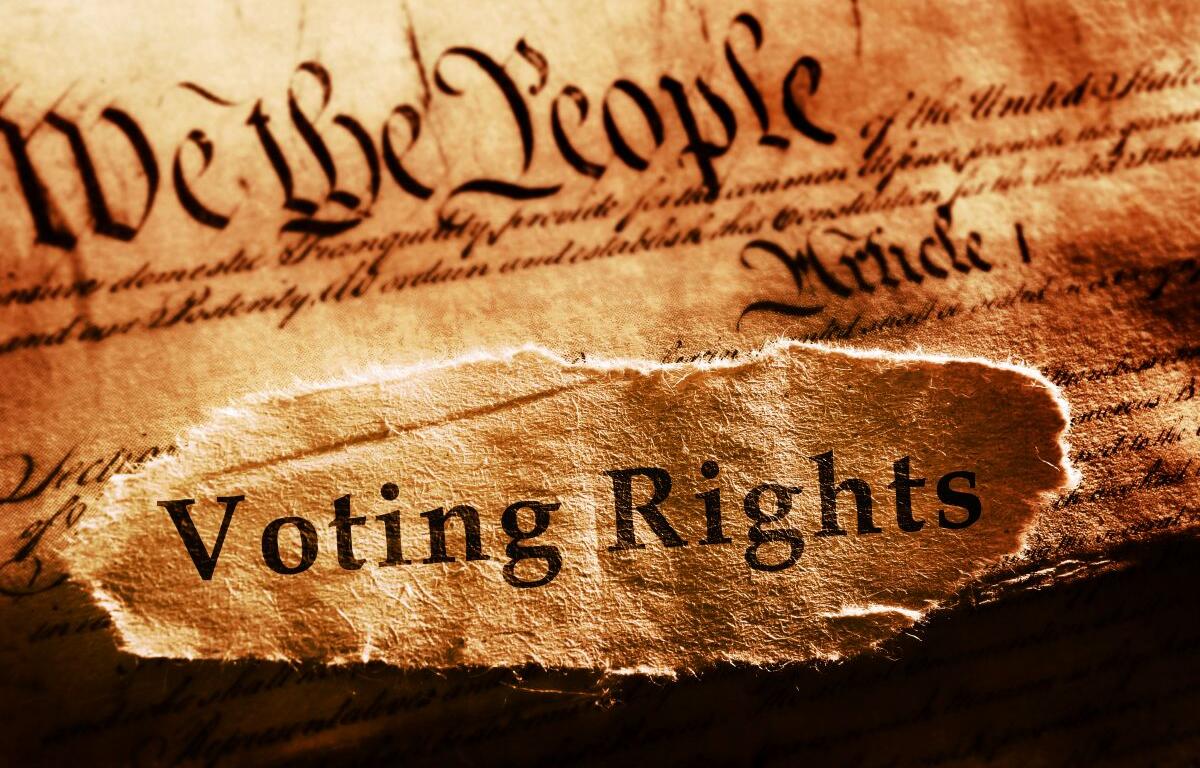

CHAMPAIGN, IL (Chambana Today) — In a landmark decision, the U.S. Supreme Court recently ruled to strike down a voting map in Louisiana, a move that advocates for civil rights say undermines the protections afforded by the Voting Rights Act. The ruling has raised alarms about the future of fair representation, particularly for minority communities, and could lead to a wave of redistricting efforts across the nation.
Illinois leaders have expressed deep concerns about the decision, especially as it pertains to the state’s ongoing efforts to ensure equitable voting rights for African Americans and other communities of color. Governor J.B. Pritzker and state legislators have vowed to continue pushing for policies that secure the right to vote and protect against gerrymandering.
Governor J.B. Pritzker shared his thoughts on the ruling, stating, “We must call this for what it is: voter suppression that will silence Black and brown voters. The magnitude of this decision cannot be understated — it guts the Voting Rights Act and its very purpose of protecting all voices. Every American deserves an equal vote.”
Carol Ammons, a member of the Illinois General Assembly, echoed these sentiments, expressing her concern over the broader implications of the ruling. “I am deeply concerned and overwhelmed by the recent Supreme Court decision and what it signals about the direction of our country,” Ammons said. “The Court’s ruling striking down a voting map in Louisiana has dealt a serious blow to a landmark civil rights law and has now opened the door for other states to redraw congressional maps in ways that could shape elections for years to come.”
She added, “This is not simply about maps or geography. It is about people. It is about whether every American, especially African Americans, has a meaningful voice in our democracy. The right to vote is fundamental to citizenship. When that right is weakened or diluted, it sends a clear message about whose voices are valued and whose are not. For generations, we have fought to be fully included in this democracy. To see those hard-won gains threatened again raises serious concerns about whether we are moving forward or slipping backwards.”
In response to the Supreme Court’s ruling, Illinois lawmakers are reaffirming their commitment to ensure fair representation. Ammons noted that Illinois has taken steps to protect voter representation by passing legislation aimed at securing the rights of communities of color. “At its core, this is about representation that reflects real people, real communities, and real lived experiences, not just lines drawn on a map,” she added.
However, not everyone is in agreement. Jeffrey Brownfield, Chair of the Champaign County GOP, offered a different perspective on the ruling, particularly regarding the issue of gerrymandering. “The Champaign GOP supports the Constitution and the ideals that every American is equal under the law,” Brownfield said. “Further, voters should decide elections, and there should not be predetermined results. The ruling leaves in place the opportunity to pursue legal action if there is an intent to discriminate against specific voters.”
Brownfield also addressed broader concerns about gerrymandering, noting that both parties in Illinois have been accused of manipulating district maps to their advantage. “When I speak with voters in the community, both Republican and Democratic, the vast majority would rather have non-partisan commissions or ‘computer programs’ design district maps for local, state, and federal elections. There is a belief that a process that is as neutral as possible allows for the best outcomes for all citizens. It also helps ensure that, where voters have split on many issues, far-right or far-left candidates will not be successful.”
As this debate unfolds, the Supreme Court’s ruling is likely to fuel continued discussions about voting rights, redistricting, and the role of the courts in shaping electoral outcomes. Illinois’ leaders remain committed to ensuring that the state’s representation remains fair and accessible for all citizens, no matter what the national landscape may look like in the coming years.
*Our newsroom reached out to the campaign of gubernatorial GOP candidate Darren Bailey but has not heard back. We will incorporate his statement in this article when we do.